Wirt Adams: Mississippi's Commissioner to Louisiana


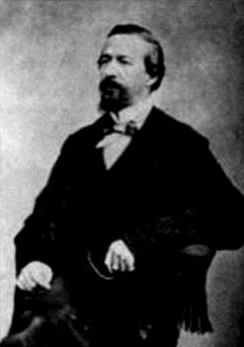
W. Wirt Adams


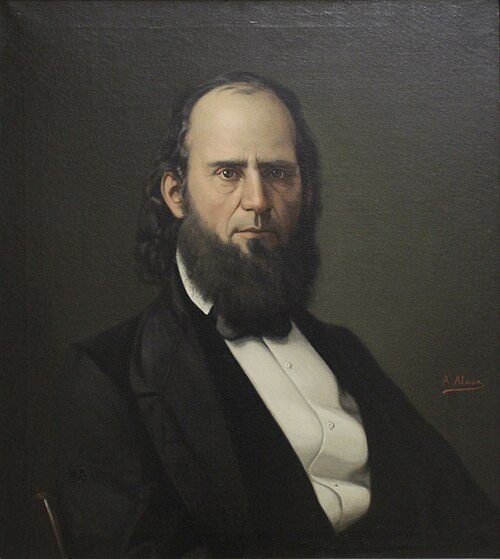
Gov. John J. Pettus of Mississippi


William Wirt Adams (1819--1888) was born in Frankfort, Kentucky,  but his family moved to Natchez, Mississippi in 1825, where his father served as a state court judge.  Wirt attended Bardstown College in Bardstown, Kentucky, and upon graduating in 1839 he joined the army of the Republic of Texas.  He returned to Mississippi and married Sallie Huger Mayarant in 1850. From then until 1861 he pursued various banking and farming opportunities, and also served two terms in the Mississippi House of Representatives.  After serving as Mississippi's Commissioner to Louisiana, he formed (and served in) a Mississippi cavalry regiment, which did rear-guard duty during the retreat from Kentucky after the fall of Fort Henry, and later covered the right flank of the Confederate army at Shiloh.  Commissioned as a Brigadier General in the fall of 1863, he endeavored to oppose Sherman's march on Meridian in February, 1864.  He surrendered with his command on May 4, 1865.

In the postwar years Adams served in a number of minor political positions, but managed to earn the enmity of John H. Martin, a newspaper editor.  On May 1, 1888 the two men encountered each other on the streets of Jackson, Mississippi; pistols were pulled, shots were fired, and when it was all over both Adams and Martin were dead.


We have a total of three documents here:
  • Correspondence between Adams and Mississippi's Gov. J.J. Pettus, and Louisiana's Gov. T.O. Moore, given here;
  • The speech given by Adams to the Louisiana Legislature, given below;
  • The responding speech from Louisiana's Lt.-Gov. Henry Hyams, given here.      

I have been unable to locate any picture of Louisiana's Lt.-Gov. Henry Hyams; if anyone can find one, I would be grateful.
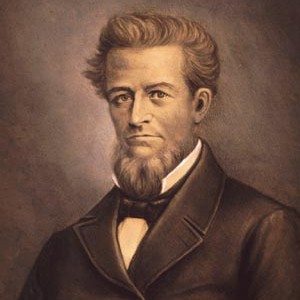

Gov. Thomas O. Moore of Louisiana


ADDRESS.

Mr. President and Gentlemen of the Senate and House of Representatives of the State of Louisiana:—In behalf of the State of Mississippi, I tender to your Executive, to your Honorable bodies, and to the people of Louisiana, my profound acknowledgments for the distinguished courtesy and kindness which have been extended to her representative.

I have been commissioned by the Governor of my State to communicate formally and officially to the authorities and people of Louisiana, “that the Legislature of Mississippi has passed an act calling a Convention of the State to consider the present threatening relations of the Northern and Southern sections of the Confederacy, aggravated by the recent election of a President upon principles of hostility to the States of the South; and to express the earnest hope of Mississippi that Louisiana will co-operate with her in the adoption of efficient measures for their common defense and safety.”

In addition to the act calling a Convention, which passed both branches of the Legislature of Mississippi by a unanimous vote, a series of resolutions were adopted by a vote approaching the like unanimity, which after reciting the grievances of the Southern States, declared secession to be the only remedy.

The discharge of this important trust, sir, has been rendered no less simple than grateful. The recommendations of your enlightened and patriotic Executive, contained in his message, followed, as they have been, by the prompt and wise action of this Legislature, in calling a Convention of the people of Louisiana, and making a munificent appropriation for arming the State; the manifestations of an almost unanimous public sentiment, which I witness around me, render any words of argument or exhortation from me, more than superfluous. As well, sir, might I attempt to swell the volume of the majestic stream which pours its resistless tide past your beautiful capitol, by adding one drop to its waters, as essay to deepen the convictions or confirm the unalterable resolves of your noble and gallant State. She has well exemplified the maxim that the time for argument in this contest with the North has gone forever, and the time for action has come. It is but doing her justice to say, that everywhere in this broad land, has she been distinguished for the moderation, conservatism and patriotism of her people. And could she give more signal proof of this well-deserved character, than in her present determination to preserve the rights, the honor, and the interests of her citizens intact, in the gravest and most perilous juncture that was ever presented to a free people?

I rejoice. Mr. President, at these unmistakable indications of her purpose, and shall bear back the intelligence of your action to the Governor and people of my State with no ordinary gratification. And amongst the popular manifestations which I have witnessed, I shall not forget that your imperial city of New Orleans, which reposes by the river side and the sea, has recently emblazoned aloft her sentiments, and elevated above the Crescent of her commercial grandeur the radiant Cross of the true Southern faith.

It is peculiarly proper, sir, that the States of Louisiana and Mississippi, contiguous in territory, and bound together by the closest commercial and social ties, should stand and act together in this contest with a malignant and ruthless foe. Upon the plains of Chalmette and the field of Mexico, their gallant sons, in the past, have locked their shields; and now, in the midst of perils far greater, involving life, honor and property, I fervently hope they will be found in the future, in opinion and action, united in bonds fraternal and indissoluble.


Back to Causes of the Civil War (Main page)

Back to The Secession Commissioners

Source: Journal of the State Convention and Ordinances and Resolutions, Adopted in January, 1861, with an Appendix,
pp. 175--179.  

Date added to website:  March 20, 2026.