For a history of the Atlantic Monthly, see here. See also this book.
 |
| Edmund
Quincy |
Where Will It
End?
by
Edmund Quincy
The Atlantic
Monthly
December, 1857
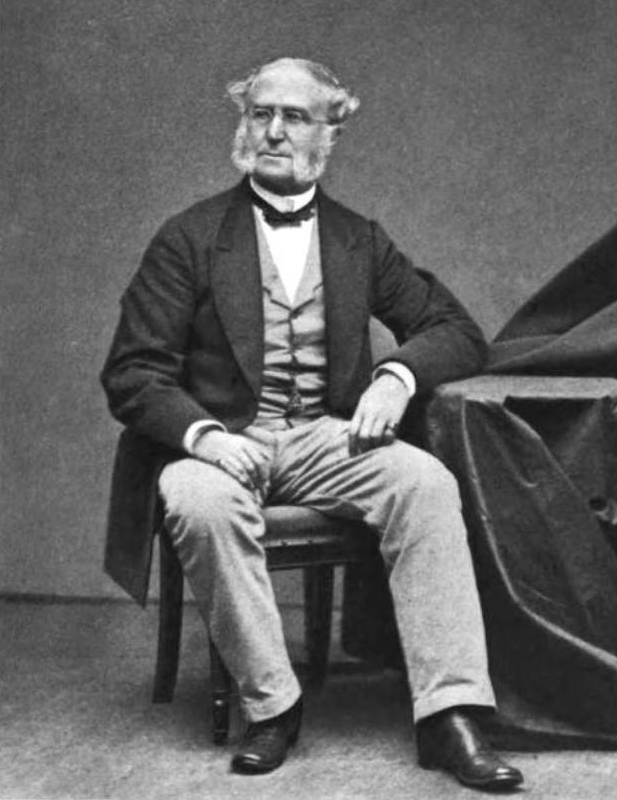
| Edmund
Quincy (1808-1877) was already a noted abolitionist when he wrote this
article for the new magazine, the Atlantic
Monthly (still publishing, now as the Atlantic). He was the son of
the Harvard University President Josiah Qunicy III (1772--1864).
Edmund graduated from Harvard in 1827, and joined the Massachusetts
Anti-Slavery Society in 1837. He was active in many abolitionist
and anti-slavery groups during the antebellum years. He was
active in the Non-Resistance Society, which opposed the use of force in
resisting evil, and opposed maintaining any union with the slaveholding
States. For a history of the Atlantic Monthly, see here. See also this book. |
|
In
almost every region of the
earth, indeed, it is literally true that “shades of the prison-house
begin to
close upon the growing boy.” As his faculties develope, he becomes more
and
more conscious of the deepening shadows, as well as of the grim walls
that cast
them on his soul, and his opening intelligence is earliest exercised in
divining who built them first, and why they exist at all. The infant
Chinese,
the baby Calmuck, the suckling Hottentot, we must suppose, rest
unconsciously
in the calm of the heaven from which they, too, have emigrated, as well
as the
sturdy new-born Briton, or the freest and most independent little
Yankee that
is native and to the manner born of this great country of our own. But
all
alike grow gradually into a consciousness of walls, which, though
invisible,
are none the less impassable, and of chains, though light as air, yet
stronger
than brass or iron. And everywhere is the machinery ready, though
different in
its frame and operation in different torture-chambers, to crush out the
budding
skepticism, and to mould the mind into the monotonous decency of
general
conformity. Fo or Fetish, King or Kaiser, Deity itself or the
vicegerents it
has appointed in its stead, are answerable for it all. God himself has
looked
upon it, and it is very good, and there is no appeal from that approval
of the
Heavenly vision. In
almost every country in the
world this deification of institutions has been promoted by their
antiquity. As
nobody can remember when they were not, and as no authentic records
exist of
their first establishment, their genealogy can be traced direct to
Heaven
without danger of positive disproof. Thus royal races and hereditary
aristocracies and privileged priesthoods established themselves so
firmly in
the opinion of Europe, as well as of Asia, and still retain so much of
their prestige there, notwithstanding the turnings and
overturnings of the last two centuries. This northern half of the great
American continent, however, seems to have been kept back by Nature as
a tabula
rasa, a clean blackboard, on which the great problem of civil
government
might be worked out, without any of the incongruous drawbacks which
have cast
perplexity and despair upon those who have undertaken its solution in
the elder
world. All the elements of the demonstration were of the most favorable
nature.
Settled by races who had inherited or achieved whatever of
constitutional
liberty existed in the world, with no hereditary monarch, or governing
oligarchy, or established religion on the soil, with every opportunity
to avoid
all the vices and to better all the virtues of the old polities, the
era before
which all history had been appointed to prepare the way seemed to have
arrived,
when the just relations of personal liberty and civil government were
to be
established forever. And
how magnificent the field on
which the trophy of this final victory of a true civilization was to be
erected! No empire or kingdom, at least since imperial Rome perished
from the
earth, ever unrolled a surface so vast and so variegated, so manifold
in its
fertilities and so various in its aspects of beauty and sublimity. From
the
Northern wastes, where the hunter and the trapper pursue by force or
guile the
fur-bearing animals, to the ever-perfumed latitudes of the lemon and
the
myrtle, — from the stormy Atlantic, where the skiff of the fisherman
rocks
fearlessly under the menace of beetling crags amid the foam of angry
breakers,
to where the solemn surge of the Pacific pours itself around our
Western
continent, boon Nature has spread out fields which ask only the magic
touch of
Labor to wave with every harvest and blush with every fruitage.
Majestic
forests crown the hills, asking to be transformed into homes for man on
the
solid earth, or into the moving miracles in which he flies on wings of
wind or
flame over the ocean to the ends of the earth. Exhaustless mineral
treasures
offer themselves to his hand, scarce hidden beneath the soil, or lying
carelessly upon the surface, — coal, and lead, and copper, and the
“all-worshipped ore” of gold itself; while quarries, reaching to the
centre,
from many a rugged hill-top, barren of all beside, court the architect
and the
sculptor, ready to give shape to their dreams of beauty in the palace
or in the
statue. The
soil, too, is fitted by the
influences of every sky for the production of every harvest that can
bring
food, comfort, wealth, and luxury to man. Every family of the grasses,
every
cereal that can strengthen the heart, every fruit that can delight the
taste,
every fibre that can be woven into raiment or persuaded into the
thousand
shapes of human necessity, asks but a gentle solicitation to pour its
abundance
bounteously into the bosom of the husbandman. And men have multiplied
under
conditions thus auspicious to life, until they swarm on the Atlantic
slope, are
fast filling up the great valley of the Mississippi, and gradually flow
over
upon the descent towards the Pacific. The three millions, who formed
the
population of the Thirteen States that set the British empire at
defiance, have
grown up into a nation of nearly, if not quite, ten times that
strength, within
the duration of active lives not yet finished. And in freedom from
unmanageable
debt, in abundance and certainty of revenue, in the materials for naval
armaments, in the elements of which armies are made up, in everything
that goes
to form national wealth, power, and strength, the United States, it
would seem,
even as they are now, might stand against the world in arms, or in the
arts of
peace. Are not these results proofs irrefragable of the wisdom of the
government under which they have come to pass? When
the eyes of the thoughtful
inquirer turn from the general prospect of the national greatness and
strength,
to the geographical divisions of the country, to examine the relative
proportions of these gifts contributed by each, he begins to be aware
that
there are anomalies in the moral and political condition even of this
youngest
of nations, not unlike what have perplexed him in his observation of
her elder
sisters. He beholds the Southern region, embracing within its circuit
three
hundred thousand more square miles than the domain of the North,
dowered with a
soil incomparably more fertile, watered by mighty rivers fit to float
the
argosies of the world, placed nearer the sun and canopied by more
propitious
skies, with every element of prosperity and wealth showered upon it
with
Nature's fullest and most unwithdrawing hand, and sees, that,
notwithstanding
all this, the share of public wealth and strength drawn thence is
almost
inappreciable by the side of what is poured into the common stock by
the strenuous
sterility of the North. With every opportunity and means that Nature
can supply
for commerce, with navigable rivers searching its remotest corners,
with
admirable harbors in which the navies of the world might ride, with the
chief
articles of export for its staple productions, it still depends upon
its
Northern partner to fetch and carry all that it produces, and the
little that
it consumes. Possessed of all the raw materials of manufactures and the
arts,
its inhabitants look to the North for everything they need from the
cradle to
the coffin. Essentially agricultural in its constitution, with every
blessing
Nature can bestow upon it, the gross value of all its productions is
less by
millions than that of the simple grass of the field gathered into
Northern
barns. With all the means and materials of wealth, the South is poor.
With
every advantage for gathering strength and self-reliance, it is weak
and
dependent. — Why this difference between the two? The why is
not
far to seek. It is to be found in the reward which Labor bestows on
those that
pay it due reverence in the one case, and the punishment it inflicts on
those
offering it outrage and insult in the other. All wealth proceeding
forth from
Labor, the land where it is honored and its ministers respected and
rewarded
must needs rejoice in the greatest abundance of its gifts. Where, on
the
contrary, its exercise is regarded as the badge of dishonor and the
vile office
of the refuse and offscouring of the race, its largess must be
proportionably
meagre and scanty. The key of the enigma is to be found in the
constitution of
human nature. A man in fetters cannot do the task-work that one whose
limbs are
unshackled looks upon as a pastime. A man urged by the prospect of
winning an
improved condition for himself and his children by the skill of his
brain and
the industry of his hand must needs achieve results such as no fear of
torture
can extort from one denied the holy stimulus of hope. Hence the
difference so
often noticed between tracts lying side by side, separated only by a
river or
an imaginary line; on one side of which, thrift and comfort and
gathering
wealth, growing villages, smiling farms, convenient habitations,
school-houses,
and churches make the landscape beautiful; while on the other, slovenly
husbandry, dilapidated mansions, sordid huts, perilous wastes, horrible
roads,
the rare spire, and rarer village school betray all the nakedness of
the land.
It is the magic of motive that calls forth all this wealth and beauty
to bless
the most sterile soil stirred by willing and intelligent labor; while
the
reversing of that spell scatters squalor and poverty and misery over
lands
endowed by Nature with the highest fertility, spreading their leprous
infection
from the laborer to his lord. All this is in strict accordance with the
laws of
God, as expounded by man in his books on political economy. Not
so, however, with the
stranger phenomenon to be discerned inextricably connected with this
anomaly,
but not, apparently, naturally and inevitably flowing from it. That the
denial
of his natural and civil rights to the laborer who sows and reaps the
harvests
of the Southern country should be avenged upon his enslaver in the
scanty
yielding of the earth, and in the unthrift, the vices, and the
wretchedness
which are the only crops that spring spontaneously from soil blasted by
slavery, is nothing strange. It is only the statement of the truism in
moral
and in political economy, that true prosperity can never grow up from
wrong and
wickedness. That pauperism, and ignorance, and vice, that reckless
habits, and
debasing customs, and barbarous manners should come of an organized
degradation
of labor, and of cruelty and injustice crystallized into an
institution, is an
inevitable necessity, and strictly according to the nature of things.
But that
the stronger half of the nation should suffer the weaker to rule over
it in
virtue of its weakness, that the richer region should submit to the
political
tyranny of its impoverished moiety because of that very poverty, is
indeed a
marvel and a mystery. That the intelligent, educated, and civilized
portion of
a race should consent to the sway of their ignorant, illiterate, and
barbarian
companions in the commonwealth, and this by reason of that uncouth
barbarism,
is an astonishment, and should be a hissing to all beholders
everywhere. It
would be so to ourselves, were we not so used to the fact, had it not
so grown
into our essence and ingrained itself with our nature as to seem a
vital
organism of our being. Of all the anomalies in morals and in politics
which the
history of civilized man affords, this is surely the most abnormous and
the
most unreasonable. The
entire history of the United
States is but the record of the evidence of this fact. What event in
our annals
is there that Slavery has not set her brand upon it to mark it as her
own? In
the very moment of the nation's birth, like the evil fairy of the
nursery tale,
she was present to curse it with her fatal words. The spell then wound
up has
gone on increasing in power, until the scanty formulas which seemed in
those
days of infancy as if they would fade out of the parchment into which
they had
been foisted, and leave no trace that they ever were, have blotted out
all
beside, and statesmen and judges read nothing there but the awful and
all-pervading name of Slavery. Once intrenched among the institutions
of the
country, this baleful power has advanced from one position to another,
never
losing ground, but establishing itself at each successive point more
impregnably than before, until it has us at an advantage that
encourages it to
demand the surrender of our rights, our self-respect, and our honor.
What was
once whispered in the secret chamber of council is now proclaimed upon
the
housetops; what was once done by indirection and guile is now carried
with the
high hand, in the face of day, at the mouth of the cannon and by the
edge of
the sabre of the nation. Doctrines and designs which a few years since
could
find no mouthpiece out of a bar-room, or the piratical den of a
filibuster, are
now clothed with power by the authentic response of the bench of our
highest
judicatory, and obsequiously iterated from the oracular recesses of the
National Palace. And
the events which now fill the
scene are but due successors in the train that has swept over the stage
ever
since the nineteenth century opened the procession with the purchase of
Louisiana. The acquisition of that vast territory, important as it was
in a
national point of view, — but coveted by the South mainly as the
fruitful
mother of slave-holding States, and for the precedent it established,
that the
Constitution was a barrier only to what should impede, never to what
might
promote, the interests of Slavery, — was the first great stride she
made as she
stalked to her design. The admission of Missouri as a slaveholding
State,
granted after a struggle that shook American society to the centre, and
then
only on the memorable promises now broken to the ear as well as to the
hope,
was the next vantage-ground seized and maintained. The nearly
contemporary
purchase of Florida, though in design and in effect as revolutionary an
action
as that of Louisiana, excited comparatively little opposition. It was
but the
following up of an acknowledged victory by the Slave Power. The long
and bloody
wars in her miserable swamps, waged against the humanity of savages
that gave
shelter to the fugitives from her tyranny, — slave-hunts, merely, on a
national
scale and at the common expense, — followed next in the march of
events. Then
Texas loomed in the distance, and, after years of gradual approach and
covert
advances, was first wrested from Mexico. Slavery next indissolubly
chained to
her, and then, by a coup d'etat of astonishing
impudence, was
added, by a flourish of John Tyler's pen, in the very article of his
political
dissolution, to “the Area of Freedom!” Next came the war with Mexico,
lying in
its pretences, bloody in its conduct, triumphant in its results, for it
won
vast regions suitable for Slavery now, and taught the way to win larger
conquests when her ever-hungry maw should crave them. What need to
recount the
Fugitive-Slave Bill, and the other “Compromises” of 1850? or to recite
the base
repeal of the Missouri Compromise, showing the slaveholder's regard for
promises to be as sacred as that of a pettifogger for justice or of a
dicer for
an oath? or to point to the plains of Kansas, red with the blood of her
sons
and blackened with the cinders of her towns, while the President of the
United
States held the sword of the nation at her throat to compel her to
submission? Success,
perpetual and
transcendent, such as has always waited on Slavery in all her attempts
to mould
the history of the country and to compel the course of its events to do
her
bidding, naturally excites a measure of curiosity if not of admiration,
in the
mind of every observer. Have the slave-owners thus gone on from victory
to
victory and from strength to strength by reason of their multitude, of
their
wealth, of their public services, of their intelligence, of their
wisdom, of
their genius, or of their virtue? Success in gigantic crime sometimes
implies a
strength and energy which compel a kind of respect even from those that
hate it
most. The right supremacy of the power that thus sways our destiny
clearly does
not reside in the overwhelming numbers of those that bear rule. The
entire sum
of all who have any direct connection with Slavery, as owners or
hirers, is
less than THREE HUNDRED AND FIFTY THOUSAND, — not half as many as the
inhabitants of the single city of New York! And yet even this number
exaggerates
the numerical force of the dominant element in our affairs. To
approximate to
the true result, it would be fair to strike from the gross sum those
owning or
employing less than ten slaves, in order to arrive at the number of
slave-owners who really compose the ruling influence of the nation.
This would
leave but a small fraction over NINETY THOUSAND, men, women, and
children,
owning slaves enough to unite them in a common interest. And from this
should
be deducted the women and minors, actually owning slaves in their own
right,
but who have no voice in public affairs. These taken away, and the
absentees
flying to Europe or the North from the moral contaminations and
material
discomforts inseparable from Slavery, and not much more than FIFTY
THOUSAND
voting men will remain to represent this mighty and all-controlling
power! — a
fact as astounding as it is incontrovertible. Oligarchies
are nothing new in
the history of the world. The government of the many by the few is the
rule,
and not the exception, in the politics of the times that have been and
of those
that now are. But the concentration of the power that determines the
policy,
makes the laws, and appoints the ministers of a mighty nation, in the
hands of
less than the five-hundredth part of its members, is an improvement on
the
essence of the elder aristocracies; while the usurpation of the title
of the
Model Republic and of the Pattern Democracy, under which we offer
ourselves to
the admiration and imitation of less happy nations, is certainly a
refinement
on their nomenclature. This
prerogative of power, too,
is elsewhere conceded by the multitude to their rulers generally for
some
especial fitness, real or imaginary, for the office they have assumed.
Some
services of their own or of their ancestors to the state, some
superiority,
natural or acquired, of parts or skill, at least some specialty of high
culture
and elegant breeding, a quick sense of honor, a jealousy of insult to
the
public, an impatience of personal stain, — some or all of these
qualities,
appealing to the gratitude or to the imagination of the masses, have
usually
been supposed to inhere in the class they permit to rule over them. By
virtue
of some or all of these things, its members have had allowed to them
their
privileges and their precedency, their rights of exemption and of
preeminence,
their voice potential in the councils of the state, and their claim to
be
foremost in its defence in the hour of its danger. Some ray of
imagination
there is, which, falling on the knightly shields and heraldic devices
that symbolize
their conceded superiority, at least dazzles the eyes and delights the
fancy of
the crowd, so as to blind them to the inhering vices and essential
fallacies of
the Order to whose will they bow. But
no such consolations of
delusion remain to us, as we stand face to face with the Power which
holds our
destinies in its hand. None of these blear illusions can cheat our eyes
with
any such false presentments. No antiquity hallows, no public services
consecrate,
no gifts of lofty culture adorn, no graces of noble breeding embellish
the
coarse and sordid oligarchy that gives law to us. And in the blighting
shadow
of Slavery letters die and art cannot live. What book has the South
ever given
to the libraries of the world? What work of art has she ever added to
its
galleries? What artist has she produced that did not instinctively fly,
like
Allston, to regions in which genius could breathe and art was possible?
What
statesman has she reared, since Jefferson died and Madison ceased to
write,
save those intrepid discoverers who have taught that Slavery is the
corner-stone of republican institutions, and the vital element of
Freedom
herself? What divine, excepting the godly men whose theologic skill has
attained
to the doctrine that Slavery is of the essence of the Gospel of Jesus
Christ?
What moralist, besides those ethic doctors who teach that it is
according to
the Divine Justice that the stronger race should strip the weaker of
every
civil, social, and moral right? The unrighteous partiality, extorted by
the
threats of Carolina and Georgia in 1788, which gives them a
disproportionate
representation because of their property in men, and the unity of
interest
which makes them always act in behalf of Slavery as one man, have made
them
thus omnipotent. The North, distracted by a thousand interests, has
always been
at the mercy of whatever barbarian chief in the capital could throw his
slave
whip into the trembling scale of party. The government having been
always,
since this century began, at least, the creature and the tool of the
slaveholders, the whole patronage of the nation, and the treasury
filled
chiefly by Northern commerce, have been at their command to help
manipulate and
mould plastic Northern consciences into practicable shapes. When the
slave
interest, consisting, at its own largest account of itself, of less
than THREE
HUNDRED AND FIFTY THOUSAND souls, has thirty members
of the
Senate, while the free-labor interest, consisting of at least
TWENTY-FOUR
MILLIONS, SIX HUNDRED AND FIFTY THOUSAND souls, has but thirty-two,
and when the former has a delegation of some score of members to
represent its
slaves in the House, besides its own fair proportion, can we marvel
that it has
achieved the mastery over us, which is written in black and bloody
characters
on so many pages of our history? Such
having been the absolute
sway Slavery has exercised over the facts of our history, what has been
its
influence upon the characters of the men with whom it has had to do? Of
all the
productions of a nation, its men are what prove its quality the most
surely.
How have the men of America stood this test? Have those in the high
places,
they who have been called to wait at the altar before all the people,
maintained the dignity of character and secured the general reverence
which
marked and waited upon their predecessors in the days of our small
things? The
population of the United States has multiplied itself nearly tenfold,
while its
wealth has increased in a still greater proportion, since the peace of
’Eighty-Three. Have the Representative Men of the nation been made or
maintained great and magnanimous, too? Or is that other anomaly, which
has so
perplexed the curious foreigner, an admitted fact, that in proportion
as the
country has waxed great and powerful, its public men have dwindled from
giants
in the last century to dwarfs in this? Alas, to ask the question is to
answer
it. Compare Franklin, and Adams, and Jay, met at Paris to negotiate the
treaty
of peace which was to seal the recognition of their country as an equal
sister
in the family of nations, with Buchanan, and Soule, and Mason, convened
at
Ostend to plot the larceny of Cuba! Sages and lawgivers, consulting for
the
welfare of a world and a race, on the one hand, and buccaneers
conspiring for
the pillage of a sugar-island on the other! What
men, too, did not Washington
and Adams call around them in the Cabinet! — how representative of
great ideas!
how historical! how immortal! How many of our readers can name the
names of
their successors of the present day? Inflated obscurities, bloated
insignificances, who knows or cares whence they came or what they are?
We know
whose bidding they were appointed to obey, and what manner of work they
are
ready to perform. And shall we dare extend our profane comparisons even
higher
than the Cabinet? Shall we bring the shadowy majesty of Washington's
august
idea alongside the microscopic realities of to-day? Let us be more
merciful,
and take our departure from the middle term between the Old and the
New,
occupied by Andrew Jackson, whose iron will and doggedness of purpose
give
definite character, if not awful dignity, to his image. In his time,
the Slave
Power, though always the secret spring which set events in motion,
began to let
its workings be seen more openly than ever before. And from his time
forward,
what a graduated line of still diminishing shadows have glided
successively
through the portals of the White House! From Van Buren to Tyler, from
Tyler to
Polk, from Polk to Fillmore, from Fillmore to Pierce! “Fine by degrees
and
beautifully less,” until it at last reached the vanishing point! The
baleful influence thus ever
shed by Slavery on our national history and our public men has not yet
spent
its malignant forces. It has, indeed, reached a height which a few
years ago it
was thought the wildest fanaticism to predict; but its fatal power will
not be
stayed in the mid-sweep of its career. The Ordinance of 1787 torn to
shreds and
scattered to the winds, — the line drawn in 1820, which the
slaveholders
plighted their faith Slavery should never overstep, insolently as well
as
infamously obliterated, — Slavery presiding in the Cabinet, seated on
the
Supreme Bench, absolute in the halls of Congress, — no man can say what
shape
its next aggression may not take to itself. A direct attack on the
freedom of
the press and the liberty of speech at the North, where alone either
exists,
were no more incredible than the later insolences of its tyranny. The
battle
not yet over in Kansas, for the compulsory establishment of Slavery
there by
the interposition of the Federal arm, will be renewed in every
Territory as it
is ripening into a State. Already warning voices are heard in the air,
presaging such a conflict in Oregon. Parasites everywhere instinctively
feel
that a zeal for the establishment of Slavery where it has been
abolished, or
its introduction where it had been prohibited, is the highest
recommendation to
the Executive favor. The rehabilitation of the African slave-trade is
seriously
proposed and will be furiously urged, and nothing can hinder its
accomplishment
but its interference with the domestic manufactures of the breeding
Slave
States. The pirate Walker is already mustering his forces for another
incursion
into Nicaragua, and rumors are rife that General Houston designs
wresting yet
another Texas from Mexico. Mighty events are at hand, even at the door;
and the
mission of them all will be to fix Slavery firmly and forever on the
throne of
this nation. Is
the success of this conspiracy
to be final and eternal? Are the States which name themselves, in
simplicity or
in irony, the Free States, to be always the satrapies of a central
power like
this? Are we forever to submit to be cheated out of our national rights
by an
oligarchy as despicable as it is detestable, because it clothes itself
in the
forms of democracy, and allows us the ceremonies of choice, the name of
power,
and the permission to register the edicts of the sovereign? We, who
broke the
sceptre of King George, and set our feet on the supremacy of the
British
Parliament, surrender ourselves, bound hand and foot in bonds of our
own
weaving, into the hands of the slaveholding Philistines! We, who
scorned the
rule of the aristocracy of English acres, submit without a murmur, or
with an
ineffectual resistance, to the aristocracy of American flesh and blood!
Is our
spirit effectually broken? is the brand of meanness and compromise
burnt in
uneffaceably upon our Souls? and are we never to be roused, by any
indignities,
to fervent resentment and effectual resistance? The answer to these
grave
questions lies with ourselves alone. One hundred thousand, or three
hundred
thousand men, however crafty and unscrupulous, cannot forever keep
under their
rule more than twenty millions, as much their superiors in wealth and
intelligence as in numbers, except by their own consent. If the growing
millions are to be driven with cartwhips along the pathway of their
history by
the dwindling thousands, they have none to blame for it but themselves.
If they
like to have their laws framed and expounded, their presidents
appointed, their
foreign policy dictated, their domestic interests tampered with, their
war and
peace made for them, their national fame and personal honor tarnished,
and the
lie given to all their boastings before the old despotisms, by this
insignificant fraction of their number, — scarcely visible to the naked
eye in
the assembly of the whole people, — none can gainsay or resist their
pleasure. But
will the many always thus
submit themselves to the domination of the few? We believe that the
days of
this ignominious subjection are already numbered. Signs in heaven and
on earth
tell us that one of those movements has begun to be felt in the
Northern mind,
which perplex tyrannies everywhere with the fear of change. The insults
and
wrongs so long heaped upon the North by the South begin to be felt. The
torpid
giant moves uneasily beneath his mountain-load of indignities. The
people of
the North begin to feel that they support a government for the benefit
of their
natural enemies; for, of all antipathies, that of slave labor to free
is the
most deadly and irreconcilable. There never was a time when the
relations of
the North and the South, as complicated by Slavery, were so well
understood and
so deeply resented as now. In fields, in farmhouses, and in workshops,
there is
a spirit aroused which can never be laid or exorcised till it has done
its
task. We see its work in the great uprising of the Free States against
the
Slave States in the late national election. Though trickery and
corruption
cheated it of its end, the thunder of its protest struck terror into
the hearts
of the tyrants. We hear its echo, as it comes back from the Slave
States
themselves, in the exceeding bitter cry of the whites for deliverance
from the
bondage which the slavery of the blacks has brought upon them also. We
discern
the confession of its might in the very extravagances and violences of
the
Slave Power. It is its conscious and admitted weakness that has made
Texas and
Mexico and Cuba, and our own Northwestern territory, necessary to be
devoured.
It is desperation, and not strength, that has made the bludgeon and the
bowie-knife integral parts of the national legislation. It has the
American
Government, the American Press, and the American Church, in its
national
organizations, on its side; but the Humanity and the Christianity of
the Nation
and the World abhor and execrate it. They that be against it are more
than they
that be for it. It
rages, for its time is short.
And its rage is the fiercer because of the symptoms of rebellion
against its
despotism which it discerns among the white men of the South, who from
poverty
or from principle have no share in its sway. When we speak of the South
as
distinguished from the North by elements of inherent hostility, we
speak only
of the governing faction, and not of the millions of nominally free men
who are
scarcely less its thralls than the black slaves themselves. This
unhappy class
of our countrymen are the first to feel the blight which Slavery
spreads around
it, because they are the nearest to its noxious power. The subjects of
no
European despotism are under a closer espionage, or a more
organized system of terrorism, than are they. The slaveholders, having
the
wealth, and nearly all the education that the South can boast of,
employ these
mighty instruments of power to create the public sentiment and to
control the
public affairs of their region, so as best to secure their own
supremacy. No
word of dissent to the institutions under which they live, no syllable
of
dissatisfaction, even, with any of the excesses they stimulate, can be
breathed
in safety. A Christian minister in Tennessee relates an act of fiendish
cruelty
inflicted upon a slave by one of the members of his church, and he is
forced to
leave his charge, if not to fly the country. Another in South Carolina
presumes
to express in conversation his disapprobation of the murderous assault
of
Brooks on Senator Sumner, and his pastoral relations are broken up on
the
instant, as if he had been guilty of gross crime or flagrant heresy.
Professor
Hedrick, in North Carolina, ventures to utter a preference for the
Northern candidate
in the last presidential campaign, and he is summarily ejected from his
chair,
and virtually banished from his native State. Mr. Underwood, of
Virginia, dares
to attend the convention of the party he preferred, and he is forbidden
to
return to his home on pain of death. The blackness of darkness and the
stillness of death are thus forced to brood over that land which God
formed so
fair, and made to be so happy. That
such a tyranny should excite
an antagonistic spirit of resistance is inevitable from the
constitution of man
and the character of God. The sporadic cases of protest and of
resistance to
the slaveholding aristocracy, which lift themselves occasionally above
the dead
level of the surrounding despotism, are representative cases. They
stand for
much more than their single selves. They prove that there is a
wide-spread
spirit of discontent, informing great regions of the slave-land, which
must one
day find or force an opportunity of making itself heard and felt. This
we have
just seen in the great movement in Missouri, the very nursing-mother of
Border-Ruffianism itself, which narrowly missed making Emancipation the
policy
of the majority of the voters there. Such a result is the product of no
sudden
culture. It must have been long and slowly growing up. And how could it
be
otherwise? There must be intelligence enough among the non-slaveholding
whites
to see the difference there is between themselves and persons of the
same
condition in the Free States. Why can they have no free schools? Why is
it
necessary that a missionary society be formed at the North to furnish
them with
such ministers as the slave-master can approve? Why can they not
support their
own ministers, and have a Gospel of Free Labor preached to them, if
they
choose? Why are they hindered from taking such newspapers as they
please? Why
are they subjected to a censorship of the press, which dictates to them
what
they may or may not read, and which punishes booksellers with exile and
ruin
for keeping for sale what they want to buy? Why must Northern
publishers
expurgate and emasculate the literature of the world before it is
permitted to
reach them? Why is it that the value of acres increases in a
geometrical ratio,
as they stretch away towards the North Star from the frontier of
Slavery? These
questions must suggest their sufficient answer to thousands of hearts,
and be
preparing the way for the insurrection of which the slaveholders stand
in the deadliest
fear, — that of the whites at their gates, who can do with them and
their
institutions what seems to them good, when once they know their power,
and
choose to put it forth. The unity of interest of the non-slaveholders
of the
South with the people of the Free States is perfect, and it must one
day
combine them in a unity of action. |
Back to Causes of the Civil War (Main page) Back to Editorial Commentary Source: The Atlantic archive, December, 1857 Date added to website: August 30, 2026 |