The
House being in Committee of the Whole on the state of
the Union—
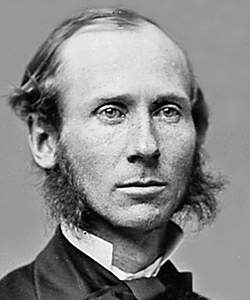
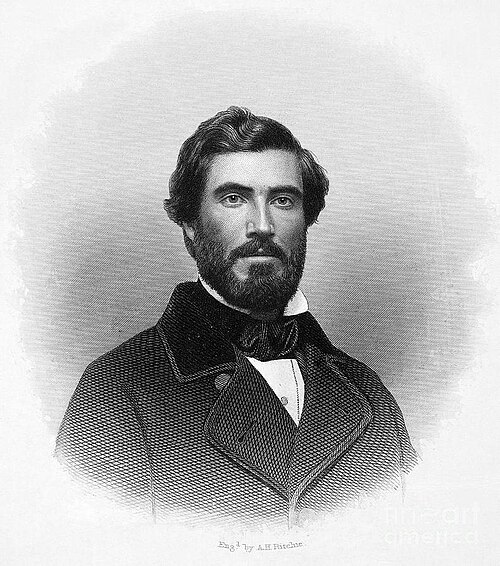
Mr.
McPherson said:
Mr.
Chairman: A parliamentary
contest, the most extraordinary in our annals, has recently closed.
During its
existence, it attracted the attention, and finally awakened the
anxiety, of the
country. At its termination, every patriot heart felt glad. In its
origin,
progress, and issue, it challenges the study of those who wish to
understand
the real position and animating spirit of parties, the capabilities and
dangers
of our system, the tendencies of events, and the nature of the moulding
influences which surround our institutions.
This
contest, which has been
already noticed in Europe to the disparagement of the republican form
of
government, was not an ordinary party movement, indicating nothing, and
wisely forgotten
as soon as made. It was not accidental, purposeless, unmeaning. It was
not an
isolated fact, coming one knows not whence, pointing one knows not
whither. On
the contrary, it was a concerted scheme, had a congenial origin, and
pointed to
a desired result. It was a political demonstration of the very highest
significance. It came in a natural succession of events. It was one of
a chain,
the threats of disunion in the contingency of Fremont’s election in
1856, made by
Democratic leaders, and their subsequent endorsement of the
lawlessness, crime,
and bloodshed, which prevailed in Kansas, as a result of a like
violent,
arbitrary, reckless, and revolutionary policy on the part of the
Democratic
party, being the immediate antecedent links; all these developments
being
symptomatic of the loathsome and deep-seated disease which has stolen
the
beauty from the life of the Democratic party, and is now destroying the
life.
It was a genuine growth; a natural outcrop; a legitimate and necessary
result
of the ideas and principles lately infused into the Democratic
party—ideas and principles
which have completely changed its character, and transformed it into a
mere
machine for factionists to handle in their war with the Government and
the
interests of the people. Neither was it the work of unknown or
uninfluential men.
It was coined in the brains of prominent officials, approved by the
leaders of
an organized party, and carried out with the system, energy, and
determination
of men in earnest—its marked characteristics, distinctive features,
peculiar
nature, striking developments, and significant surroundings,
constituting it
one of the most remarkable and suggestive indications of the day.
IT STANDS ALONE.
In
almost all respects, it was
without parallel. In duration only, was it exceeded by that of 1855-6,
which
can, in no other respect, be compared. Then there was no resort
to
parliamentary strategy, to prevent efforts to elect a Speaker, and more
votes
were taken in one week than, this session, were taken in six weeks.
There was
no persistent speech-making for the same purpose; there was no factious
interposition, by a minority, to prevent the majority from performing
the first
duty imposed upon them by the Constitution and the laws; there was no
defiant declaration
of treasonable purpose to break up the Government the moment the
administration
of it passes from present hands; there was no organized movement
directed
towards a dissolution of the Congress, without a discharge of its
functions. In
one word, then, there was no incipient treason.
ITS NATURE AND
EFFECT.
I
have endeavored to view this
subject calmly, fairly, and impartially. I have looked at it in the
light of
the various excuses by which it is sought to justify or palliate the
course of
the Administration party, and my conviction is firm that,
notwithstanding the
approval given it by high officers of State, it was not only in
violation of
the Constitution and of parliamentary and statute law, but was factious
and
revolutionary in character. During it, there was resort by them to
means
unusual and unheard of; there were purposes announced incompatible with
the safety
of the people, the peaceful performance of duty by their
Representatives, and
the stability of the Government; and there were precedents set of the
most
alarming and fearful character, which, if followed, will place it in
the power
of fifty members wholly to prevent the organization of any future
House; thus
making its existence a matter of sufferance, and the Government as
feeble as
the old Confederation which it supplanted. Nothing can save us from
this
perpetual danger but the enactment of a law, of which I am glad to see
notice
has been already given, by which these revolutionary precedents will be
nullified, a future turbulent and disorganizing minority will be
disarmed, the
majority principle preserved, and the rights of majorities secured
against all
possible combinations.
THE LAW AND ITS
OBLIGATION.
Let
the facts bear testimony! We
met on the 5th day of December in pursuance of law, whereupon the names
of the
members elect were called by the Clerk of the last Congress. On motion,
it was
resolved, according to immemorial usage, that the members proceed to
elect a
Speaker. This was clearly the first duty; and the motion was
unanimously agreed
to. The Constitution confers upon the members of the House of
Representatives the
power to choose their Speaker and other officers; and the act of
Congress of 1789,
the first on the statute book, provides that he shall be chosen; that
the oath
of office shall be administered by one member of the House to the
Speaker, and
by him to all the members present, and to the Clerk, “previous to
entering on
any other business.” Thus the organization of the House, by electing a
Speaker
and Clerk, is made a condition precedent to entering on any other
business, and
is the first and essential step. No member is at liberty to disregard
this
duty. No one can do so without infidelity. And all are bound to perform
it at
once; or, failing in that, to use all practicable means to effect
it at the
earliest possible moment. No one can be justified in interposing the
least
obstacle to the performance of this duty by the House. Tried by this
test, how
stand the parties?
THE MEANS USED TO
KEEP UP DISCORD.
After
one vote for Speaker had
been taken without result, an Administration member introduced a
resolution of
an extraordinary character, in violation of parliamentary law and
practice, and
in contravention of the act of 1789—a resolution which, if adopted,
would have
been inoperative, which hence had no practical value, and could not in
any
manner have facilitated the organization; and which was so
objectionable in its
terms that at the conference of representatives of the three
anti-Republican
elements of the House—the Administration party, the South Americans,
and a
portion of the Anti-Lecompton Democrats—held on Sunday, January 8, in
pursuance
of an arrangement publicly made in the House, with the avowed purpose
of
securing a union of their votes to defeat Mr. Sherman, it was
unanimously
resolved to recommend the withdrawal of the resolution, and the
substitution of
another, differing much in phraseology and spirit. Pending the
consideration of
this resolution, the Administration party forced the House to adjourn
on the
first day without a second vote for Speaker. On the next day, a
substitute for
it was offered, when, after debate, it was moved to lay the whole
subject on
the table, that the House might proceed to elect a Speaker. This was
lost by a
tie vote—all the Administration members voting in the negative.
Thereupon, they claimed unlimited freedom of debate, and denied that
there was
any power in the body to stop it. Points of order and other
complications of
the question were made and withdrawn, as the exigencies of debate
suggested.
They spent whole weeks in making mischievous and incendiary speeches,
which,
intemperate in the highest degree, caricatured the principles held by
this side
of the House, and were intended to arouse sectional animosities, and
intensify
alarm, that miserable partisan purposes might be promoted. They
objected to a
resolution proposed by the gentleman from Illinois, [Mr. Morris,] that
no debate
be allowed until after the election of Speaker. They refused to make an
arrangement for having at least one vote for Speaker each day; again,
they
objected to a resolution providing for three votes daily; and for a
time they even
turned a deaf ear to the feeling appeal of the gentleman from Virginia,
[Mr.
Clemens,] who, in feeble health and wearied with long sessions, desired
a
settled understanding on the subject, that he might know when his
presence was
necessary, and when he might retire from the floor.
When
not ready to speak, being
unwilling to vote, they made dilatory motions, and thus compelled an
adjournment. They refused to permit the offering of a resolution to
limit each
debater to thirty minutes, and one speech on a pending question, until
all
desiring had spoken. They threatened to remain in session until March
4, 1861,
rather than allow the adoption of the plurality rule, which was twice
adopted
under like circumstances, is recognised in the rules of the House and
in all
popular elections, and which for weeks appeared to be the only escape
from the
entanglement. At first, they appeared willing to permit a vote to be
taken upon
the rule, and submit to the result. Then they made that contingent upon
the
House voting on the resolution offered the first day. Then they
declined to say
that if the latter were voted on, they would agree to vote upon the
former.
And, finally, they declared that it never should be voted upon; and
that, to
prevent it, resort would be had to every parliamentary means at
command. Not
content with declaring this purpose, which, in the existing condition
of
things, seemed tantamount to absolute prevention of organization, form
and substance
were given to this threat by fifty-eight of them signing a paper
pledging
themselves to each other to act together in resisting, by all
parliamentary
tactics, strategy, and means, known to the Constitution and the law,
the
adoption of the plurality rule.
The
full force of this will be
better understood when it is stated that fifty men, thus banded
together, a
unit for purposes of disorganization, can, by resorting to the endless
chain of
dilatory motions to adjourn, to adjourn over, to be excused from
voting,
&c, on all which, constantly repeated, they could call the yeas and
nays,
effectually and forever prevent the election of a Speaker, the passage
of a
bill, or the transaction of an item of legislative business. Such a
combination
was made on the Administration side, and its nature and terms, and
their
purpose to persist in it, openly proclaimed upon the floor. This
conspiracy
contemplated three things: to prevent a vote being taken on the
plurality rule;
to prevent its adoption; and to prevent the election of a Speaker under
it. It
was made by a minority in the House, who, by these anti-constitutional
methods,
proposed to prevent the majority from adopting such rules as would
rescue the
House from its condition of embarrassment. It was an attempt of a
minority to
coerce the House into their line of policy; to introduce force into our
system—the last desperate resort of those bent on ruining if no longer
permitted to rule.
Let
me say that all the
Administrationists did not enter into this conspiracy. Several, it was
stated,
refused to do it; and it was further stated, that no Northwestern
Democrat had
signed it. I have no doubt this is true. More might have been said—that
no
Northern Democrat had taken this bold step. But I do not recollect a
single
occasion, after it became known that this factious and revolutionary
combination existed, on which any of the Northern Democracy refused to
vote
under the leadership of the very gentlemen who admitted the existence
of the
compact, and were in the act of fulfilling it.
It
must not be understood that
the Administration party refused to permit any votes for Speaker to be
taken.
They were too sagacious for that. When it was known to be safe, they
were
willing to amuse themselves, flatter each other with cheap compliments,
and,
above all, satisfy the country, as the phrase goes. During the first
week, they
allowed three votes to be taken; during the second, seven; during the
third,
when there were hopes of an Administration combination with other
parties,
eleven; during the fourth, when these hopes had disappeared, three;
during the
fifth, five; during the sixth, five; during the seventh, none; during
the
eighth, five; and during the ninth, five; in all, forty-four votes in
forty
days of actual session. In 1855, there were over one hundred and thirty
votes
taken in the same period.
Of course,
only factious means
could have produced such results. When the contest was in its earlier
stages,
and before the worse steps were taken, the gentleman from Alabama [Mr.
Cobb]
admitted that the prevention of votes, raising frivolous points of
order,
making dilatory motions, and discussing every proposition with
unlimited
freedom, both as to time, range of thought, and frequency, were
factious; but
there is scarcely a parliamentary word which can truthfully
characterize the
policy of the Administrationists, when it ripened into organized
conspiracy. The
early course was factious; the latter, revolutionary. The
non-organization of the
House is of itself a revolutionary act, and so admitted to be by the
gentleman
from Maryland, [Mr. Stewart,] involving disturbance, clogging, stoppage
of the
whole machinery of Government. It is not revolution completed, but that
is only
because of the limited power of the parties conspiring. Yet we were
repeatedly
and most positively assured that, except the House were organized in
the manner
they preferred, it never should be organized, no matter what the
consequences; and
constant proofs of this purpose were spread upon the records, and sent
forth to
the people. By whom, and how, was this done?
WHO WERE THE
CONSPIRATORS?
I
have not been able to find,
upon the records, that declarations such as have been adverted to were
made by
any gentlemen except those who are members of the Administration party,
or,
being outside of all political organizations, habitually vote with it.
And,
except one South American, the fifty-eight signers of the mutual pledge
are
exclusively members of the Democratic party, or gentlemen who
co-operate with
it, and certain of them are recognised leaders.
It
is in no spirit of exultation
that I state these unquestionable facts. On the other hand, it is with
deep
regret that I am compelled to believe that the great Democratic
party—that
party which has been, for more than a quarter of a century, the
controlling
interest in the Republic; which was founded by great men to accomplish
good
purposes; which has impressed itself most forcibly, and generally
beneficently,
upon the history of the country, and through it upon the world; which
has
linked its name with some grand achievements, and which has had upon
its roll
patriot statesmen, eloquent orators, accomplished scholars, and gallant
soldiers—has degenerated into an organization, whose leading spirits,
if
sincere in their enunciations, are enemies of the Government, and, if
insincere, are bad men, who add to the guilt of hypocrisy a
recklessness which
is well-nigh impious.
THEY ARE ALREADY
REBUKED.
Sir,
gentlemen on the other side
of the House do not realize the position they have deliberately
assumed, if
they suppose that the American people do or can approve it. This nation
is not prepared
to commit self-destruction. Nor will it permit misguided, impulsive,
rash men,
who happen to be their Representatives, to destroy what they are chosen
to
uphold; to violate what they were elected to defend. The shocking
sentiments uttered
on the other side have already received the condemnation of the
people—that great
tribunal of America, to whose judgment all political questions are
referred.
All over the Southern country, the voice of reason is heard above the
din of
madness; and flippant demagogues are warned of their impotency to
perform their
self-assumed task of preparing the public mind for disunion. The press,
and the
people through mass meetings and their local Legislatures, unite to
reprobate
the crime, and warn those drifting towards its commission. All over the
North
there is but one sentiment. It pervades all parties: penetrates all
communities;
fills all hearts. That sentiment is:
THE MAINTENANCE OF
OUR NATIONAL UNION,
against
all foes, foreign and
domestic. I have said this sentiment pervades all parties. For this
reason it
is, that, whilst Northern Democrats in Congress have been comparatively
unconcerned about the general course of their Southern allies on this
vital
question, the leaders at home, who have had occasion to see the effect
produced, have been exceedingly restive under the ceaseless preaching
of
disunion. They have made haste to disown it, to rid their skirts of all
responsibility for it, and have gone to the extent of reading out of
the
Democratic party the leading gentlemen on the other side of this House.
PENNSYLVANIA
DEMOCRATS.
A
striking instance in point
recently occurred in Pennsylvania. While the struggle for Speaker was
at its
height, the General Assembly of that State passed two resolutions on
the
subject. The latter is in the following terms:
“Resolved, That Pennsylvania remains,
as ever, faithful and true to the Constitution and the Union, and
determined that
they shall be maintained; that the treasonable threats of disunion
uttered by
the adherents of the present National Administration on the floor of
Congress
will not deter her people from the expression of their political views
and the proper
protection of her interests, but will be treated with the utmost
contempt and
scorn; while any attempt to carry such threats into execution will be
met by
her determined resistance.”
A
day or two after the passage of
these resolutions, the Democratic members of the Senate placed upon the
journal
of that body a protest, embodying the reasons why they had voted
against the
resolutions of the majority, concerning which they say, among other
things,
that—
“They
[the majority resolutions]
are untrue in the intimation that ‘the adherents of the present
National
Administration on the floor of Congress’ have uttered treasonable
threats of
disunion; for it is notorious that any such threats, by whomsoever
uttered,
were not made as adherents of an Administration distinguished for its
steadfast
devotion to the Union, and its unflinching support of the Confederacy
and the
Constitution on which it rests.”
The
anxiety of these Pennsylvania
Democratic Senators to escape the odium of being identified with
utterers of
treasonable disunion sentiments is most apparent. Before, however,
proceeding to
consider that point, let me remark that their protest raises another
question
of fact; that is, whether the present Administration has been
distinguished for
its steadfast devotion to the Union and its unflinching support of the
Constitution. I will not waste time in discussing the question; but
wish to say
that, in my opinion, this Administration has been controlled by
Southern
nullifiers; has strengthened that interest which now, likewise, aims to
despotize over the people; has introduced and intensified discord; has
violated
the foundation principles of free government; and has given countenance
and approval
to arbitrary, despotic, and anti-constitutional doctrines, whose
prevalence
has, in turn, weakened the Confederacy, by disturbing the just
relations of the
States to each other—for proof of which, I confidently appeal to
current
history. Observe, also, the quibble in the denial of the protest. It is
said
that treasonable threats, &c, by whomsoever uttered, “were not made
as
adherents of an Administration,” &c. That is, they were not made by
persons
in the capacity of adherents! If this be the meaning of the Senators,
their
subterfuge is contemptible, and justly lays their motives open to
suspicion. If
this be not the meaning, and if the obscure phraseology be a mere error
of
expression, and if their allegation be that the Administration
Congressmen have
not been uttering disunion threats, I appeal to the record for the
language
used, and for the political status of the members using it. I
think it can
easily be proved that the Administration party in Congress is tainted
in all
its parts, and certainly in its head and heart, (the Southern portion,)
with
both secession and disunion heresies.
DEMOCRATIC
DISUNIONISTS AND THEIR THREATS.
Why,
if there be meaning in
language and sincerity in men, the master spirits of the Democratic
party in
Congress are covered with the scrofulous taint of disunion. There yet
ring in our
ears the echoes of the most unexampled declamation, every note of which
grates
harshly upon our ears.
The
gentleman from South Carolina, [Mr. Keitt,] in a recent
speech, said:
“Should the Republican party succeed in the
next Presidential election, my advice to the South is to snap the cords
of the
Union at once and forever.”
And
the honorable member was one
of the most active in efforts to effect the election of a Democratic
Speaker,
and supported every candidate named on that side, except that Northern
Democrat
in whose hands the flag went down in defeat.
The
gentleman from Mississippi
[Mr. Lamar] said that when the spirit of the Constitution (of course,
as he
understood it) was no longer observed on this floor, he would be
against the Government,
would raise the banner of secession, and would fight under it as long
as the blood
flows and ebbs in his veins.
His
colleague, former Governor of
his State, [Mr. McRae,] declared that, in case of the election of a
Republican
President, his counsel to the people of Mississippi “would be to take
independence out of the Union in preference to the loss of
constitutional
rights, and consequent degradation and dishonor, in it.” He said,
further, “that
this is his position, and the position the Democratic party of
Mississippi will
maintain.” They propose to consider the mere election of a Republican
President
cause for disunion, without waiting for the loss of constitutional
rights,
&c, which they affect to believe might flow from it. The gentleman
from
Mississippi is a member of the Democratic party, and has for years been
one of
its distinguished leaders. This session, he was one of the famous
committee
constituted to make the proposed Administration combination,
and
organize this House. He voted for all the Democratic candidates for
Speaker.
Another
gentleman from Mississippi [Mr. Singleton] gave
notice that—
“When
you elect a Black
Republican—Hale, Seward, or Chase—President of the United States;
whenever you
undertake to place such a man to preside over the destinies of the
South, you
may expect to see us undivided and indivisible friends, and to see all
parties
of the South arrayed to resist his inauguration. *
* * We
can never quietly stand by and permit the control of the army and navy
to go
into the hands of a Black Republican President.”
He
further expressed the opinion
that, unless certain conditions were complied with, and, among others,
the
Territories of the Union thrown open to slavery, and slavery protected
in them
by Congress, the historian now lives who would write the sad epitaph of
Ilium
fuit upon the monument of the nation.
The
author of this language also
voted for all the Democratic candidates for Speaker.
Another
member from Mississippi [Mr. Davis] said:
“Gentlemen
of the Republican
party, I warn you. Present your sectional candidate for 1860; elect him
as the
representative of your system of labor; take possession of the
Government, as
the instrument of your power in this conflict of ‘irrepressible
conflict,’ and
we of the South will tear this Constitution in pieces, and look to our
guns for
justice and right against aggression and wrong.”
Thus
it is announced, that the
election of a President representing the free white-labor system of the
country
will be accepted as, of itself, justifiable cause of dissolution of the
Union! Men
may be elected and inaugurated as President who represent the negro
slave-labor
system, and will wield all the power of the Government for its
expansion. But
the Union must be dissolved, and the inauguration of an elected
President be prevented,
who represents, sympathizes with, or would build up, the interests of
the free
white laboring men of the United States! Such is the deliberate
announcement
made on this floor, by a gentleman most prominent in the councils of
the
Democratic party. I commend it to Northern working-men.
The
gentleman from Alabama [Mr.
Moore] would not wait for any overt act, but would consider the
election as
President of any Republican candidate, entertaining sentiments like
those of
Seward or Chase, as a declaration of war against the rights of his
people; and
he believed that his gallant State will not hesitate, in such a
contingency,
let the consequences be what they may, to fall back on their reserved
rights,
and declare to the world, “As for this Union, we have no longer any lot
or part
in it.” He rebuked the gentleman from Tennessee [Mr. Nelson] for “his
laudation
of this glorious Union."”
His
colleague [Mr. Curry] said:
“I
am not ashamed or afraid
publicly to avow that the election of William H. Seward or Salmon P.
Chase, or
any such representative of the Republican party, upon a sectional
platform,
ought to be resisted to the disruption of every tie that binds this
Confederacy
together.”
Which
sentiment, the
Congressional Globe
informs
us, was applauded “on the Democratic side of the
House.”
His
colleague [Mr. Pugh] said, if
the Republicans get possession of the Government—
“Then
the question is fully
presented, whether the Southern States will remain in the Union, as
subject and
degraded colonies, or will they withdraw and establish a Southern
Confederacy
of coequal homogeneous sovereigns? In my judgment, the latter is the
only
course compatible with the honor, equality, and safety of the South;
and the
sooner it is known and acted upon the better for all parties to the
compact.”
His
colleague [Mr. Clopton]
defended “the policy of secession in the event of the success and
triumph of
the Black Republican party, as a preventive remedy against
injustice and
oppression.” All of these gentlemen acted with the Democratic party in
the
contest for Speaker, though they refused to vote, on the last ballot,
for the gentleman
from Illinois, [Mr. McClernand.]
The
member from Georgia [Mr.
Crawford] said he spoke the sentiment of every Democrat on the floor
from that
State, when he declared “they will never submit to the inauguration of
a Black
Republican President;” which, the Congressional Globe informs us, was
applauded
from the Democratic benches. He repeated the remark, and he was again
applauded
in the same quarter. Further, he said for himself, that he had lost all
hope of
equality in the Union, and he was for independence now. He also said
that slavery
“demands expansion, and will have it.” His colleague [Mr. Gartrell]
expressed
substantially the same sentiment. These gentlemen voted for all the
Democratic
candidates for Speaker.
The
gentleman from South Carolina
[Mr. Bonham] said, that upon the election of Seward, or any such man,
he "
was in favor of an immediate dissolution of the Union."
His
colleague [Mr. Miles] said he
was a sectional man; that he owed his chief and primary allegiance to
South
Carolina; and that he felt no sympathy with that general,
indiscriminate
laudation of this nation, which seems to swallow up in that one idea
every
notion of State rights and State sovereignty.
The
gentleman from Alabama [Mr.
Moore] said that to his “gallant State he owed his first and highest
allegiance.”
His
colleague [Mr. Curry]
protested that to “Alabama he owed his first and undivided allegiance.”
The
gentleman from Virginia [Mr.
De Jarnette] said, that Seward might be elected President of the North,
but of
the South never; and that Virginia, in view of her ancient renown, in
view of
her illustrious dead, and in view of her sic semper tyrannis,
will
resist his authority.
His
colleague [Mr. Leake] denies
that Virginia will consent to fight within this Union for her rights—as
lately
proposed by Governor Wise, and approved by some of the delegation in
Congress. He
said the idea was ridiculous in the extreme; and he claimed that
Virginia has
the right, when she pleases, to withdraw from the Confederacy; which
sentiment,
the Globe's report of proceedings states, was applauded upon the
Democratic benches.
Both these Virginia members voted for all the Democratic candidates for
Speaker.
NO DISUNIONISM
OUTSIDE OF THE SOUTHERN DEMOCRACY.
I
might multiply extracts,
selecting from other speeches in the House, and from those of most
prominent
Democrats in the Senate. Surely, these will satisfy the most
incredulous that a
very large proportion of the Democratic leaders of the South are
secessionists
and disunionists; that these opinions place them beyond the pale of
sympathy or
confidence from the Union-loving masses; and that they are, of
necessity, most unsafe
and unfit men to be intrusted with our great national interests. Yet it
is most
true, that the Democratic organization is in the hands of these
gentlemen, and
such as they; that the States they represent elect Democratic
Presidents, and
send the bulk of Democratic members of both branches of Congress; that
they
control the Congressional caucuses and National Conventions, and mould
the
policy of the party; and that a large portion of their power for evil
grows out
of their position as managers of the Democratic party. Outside of them,
there
is no disunion sentiment of the least consequence. The disunionist’s
home is in
or near the Democratic party; and he selects that because his brethren
are at
its head, and because he has found it to be the most eligible workshop
he can
find, in which to prepare the weapons he intends to wield against the
Union.
Sir,
let me not be misunderstood.
I speak not of the masses of that party, North or South. In both
sections they
are honest, sincere, and patriotic. They are lovers of the Union, and
would
shed their blood to maintain it, as their fathers did to confirm and
preserve
it. But they have been betrayed. Already the truth is breaking upon
them, and
they begin to realize, more or less clearly, that they are in truth the
motive power
of a machinery which is actually levelled at what is nearest and
dearest to
them. It is difficult to realize such perfidy; but when convinced of
it, and of
the policy of the masters of the Democratic organization, the people of
both sections
will rise in their might and majesty, and, plowing up all the
prejudices of
education and all the influences of habit, turning deaf ears to party
rallying
cries, and offering all their personal preferences a sacrifice upon the
altar
of their country, they will pull down and stamp with reprobation those
who have
gained confidence only to abuse it, sought power only to sap the
foundations of
the Republic. There is a fearfulness in a people wielding the sword of
avenging
justice. Here it will be done peacefully, quietly, but effectually, as
it has
hitherto been; and the splendid devotion of a whole nation to
themselves—as
will on that day be made manifest—will send fear to the hearts of the
traitorous, joy to the hearts of the patriotic.
The
Administration party in this
House have not only pursued a reckless, factious, disorganizing, and
revolutionary course; not only ranged themselves under the banner of
avowed
secessionists, and, at the least, given the approval of silence to the
boldest
declarations of treasonable purposes, thereby shocking at once the
moral sense
and the patriotic instincts of the people; but they have shown, in the
actual
votes cast for Speaker, that there is wanting to them the compactness
of men
devoted to great ideas, and united for their establishment; that there
is no bond
of principle between them. The demoralization of the Administration
party in
this House, as proved in this contest, is everywhere accepted as a type
of its
demoralization throughout the country; which, in return, is the reward
of its
abandonment of principle.
Let
us see the variety of their
candidates for Speaker, with a view to aid in fixing the present
position of
parties.
THE CANDIDATE OF THE
ADMINISTRATIONISTS.
Their
caucus candidate for
Speaker was the gentleman from Virginia, [Mr. Bocock,] who has been
identified
with the legislation of the last twelve years, and who, in 1850, after
the
passage of the compromise measures, in company with thirty-seven other
members
of the Democratic party, (Governor McDowell, of Virginia, not
included,) issued
an address to the people of the South, from which the following is an
extract:
“We,
whose names are hereto
annexed, address you in discharge of what we believe to be a solemn
duty, on
the most important subject ever presented for your consideration. We
allude to
the conflict between the two great sections of the Union,
growing out of
a difference of feeling and opinion in reference to the relations
existing
between the two races, the European and the African, which inhabit the
Southern
section, and the acts of aggression and encroachment to which it has
led. The
conflict commenced not long after the acknowledgment of our
independence, and
has gradually increased until it has arrayed the great body of the
North
against the South on this most vital subject. In the progress of this
conflict,
aggression has followed aggression, and encroachment encroachment,
until they
have reached a point when a regard for peace and safety will not permit
us to
remain longer silent.”—See Benton’s Thirty Years’ View, p.
734, vol. 2.
This
manifesto was signed by the
present Senators from Virginia, Senators Fitzpatrick of Alabama, Yulee
of
Florida, Johnson of Arkansas, and others not now in public life. Mr.
Seward has
been most severely criticised, and most vehemently denounced, for
having said
in his Rochester speech, in 1857, that there was in this country an
“irrepressible
conflict between opposing and enduring forces,” by means of which the
United
States will, sooner or later, become either entirely a slaveholding
nation, or
entirely a free-labor nation. The conflict he speaks of is one of
ideas. That
of which the Democratic manifesto speaks is, “the conflict between the
two great
sections of the Union,” which is the interpretation placed by the
Democrats on
Mr. Seward’s remark, and at which they have expressed utmost horror.
Thus, the
doctrine of the irrepressible “conflict between the two great sections
of the
Union,” held up as a fearful phantom by the Democracy, has a Democratic
paternity; is at least ten years old; and, so long since, received the
endorsement of the Democratic caucus candidate for Speaker, who, in
turn, has
been supported and endorsed by every member of the Democratic party on
this
floor.
Failing
with the gentleman from
Virginia, they rallied upon his colleague [Mr. Millson] with the same
result.
Twenty
of them then voted for the
gentleman from Virginia, [Mr. Boteler,] who is widely known as a South
American; was a member of the Philadelphia Convention which nominated
Mr.
Fillmore in 1856, and is in favor of a Congressional slave code for the
Territories.
Forty
of them then voted for the
gentleman from Tennessee, [Mr. Maynard,] who, though presented as an
old-line
Whig, and as never a member of the Know Nothing order, had political
association in the last Congress, and has in this, with the South
Americans.
They
gave eighty-nine votes to
the gentleman from Texas, [Mr. Hamilton,] who is understood to be in
favor of a
Congressional slave code for the Territories.
They
gave eighty-three votes to
the gentleman from California, [Mr. Scott,] who had previously denied,
on the
floor of the House, the power of Territorial Legislatures to prevent
the existence
of slavery in a Territory, and who, thereby, placed himself on the
south side
of the Cincinnati platform.
They
gave, once thirty-three and
again thirty-seven votes; and later in the session, ninety-one, and
again
eighty-five votes, to the gentleman from Illinois, [Mr. McClernand,]
who claims
for the Territorial Legislatures the power denied by the gentleman from
California, [Mr. Scott,] but who considers the existence of the power a
judicial question, to be affirmed or denied by the proper tribunals, to
whose
decision he is willing to defer. It is but just to state, that nine
Southern
members, who voted for one or more of the other Democratic candidates,
declined
to vote for the gentleman from Illinois.
The
Democratic or Administration
party also gave all their votes, save two, to the gentleman from North
Carolina, [Mr. Smith,] who, calling himself a Whig, twice received the
support
of the Americans of his district, to an extent sympathizes with and
approves of
their principles and policy, and is now here by virtue of that support;
who
acts with the South American party in this House; who supported the
gentleman from Virginia [Mr. Boteler] when he was the South American
candidate
for Speaker, and subsequently the gentleman from North Carolina [Mr.
Gilmer]
when he occupied that position; who was placed before this House by the
South
American member from Kentucky [Mr. Mallory] as the candidate of that
party,
nominated in a full caucus, at which the Northern member of the party
[Mr.
Briggs] says he was present; and who received the votes of that entire
delegation
on this floor. No one who witnessed can ever forget that scene, as one
by one, first
rapidly, then more and more slowly, the Democratic members fell out of
their
own line into another, until all but two, conveniently forgetting the
bristling
declarations of the Cincinnati platform on the subject of Americanism,
and the
unrepealed resolutions of the Democratic members of the Thirty-fourth
Congress,
placed their votes side by side with those of the South Americans of
the House,
whose position and doctrines they have recently assailed with intensest
bitterness.
The
county from which I come yet
rings with Democratic protestations of undying hostility to Americanism
in all
its forms. On every hill-top, in every school-house, from every stump,
there has
gone up this one all-absorbing rallying- cry. I have never doubted its
insincerity. It was a transparent man-trap. It was too persistently
made to be
honestly meant. All over the land, there was, for a time, the same
expression
of opinion; and the various State and county platforms pledged a
ceaseless
warfare with Americanism. On the 27th of January, I860, in the House of
Representatives of the nation, there was furnished indubitable evidence
that
another issue absorbs Democratic devotion; that a new question has
dwarfed the
American into insignificance; and that Democratic profession of
hostility to
Americanism is as meaningless as Democratic profession of protection in
1844,
and fidelity to free labor in 1856.
Now,
let me recapitulate the
variety of candidates whom the Democrats in Congress have more or less
generally supported, and the variety of doctrines they have endorsed.
They
voted for the gentleman from
Virginia, [Mr. Bocock,] who voted for the repeal of the Missouri
compromise,
sustained the Lecompton Constitution, and in 1850 proclaimed, in its
broadest
and most offensive form, an irrepressible “conflict between the two
great
sections of the country.”
They
voted for the gentleman from
Virginia, [Mr. Millson,] who voted against the repeal of the Missouri
compromise.
They
voted for the other
gentleman from Virginia, [Mr. Boteler,] who, a South American,
repudiates, like
the two preceding, popular sovereignty, and is in favor of a
Congressional
slave code for the Territories.
They
voted for the gentleman from
Tennessee, [Mr. Maynard,] who, a Whig with American associations,
supported the
Lecompton Constitution, and scouts at popular sovereignty.
They
voted for the gentleman from
Texas, [Mr. Hamilton,] who is now a Democrat, and in favor of a slave
code, and
who, in withdrawing his name, gravely expressed the opinion that the
Union was
then in process of dissolution—a great dissolving view in the act of
disappearing from mortal vision!
They
voted for the gentleman from
California, [Mr. Scott,] who, a Free-State Democrat, discards popular
sovereignty, upon which the Democratic party made their successful
campaign in 1856.
They
supported the gentleman from
Illinois, [Mr. McClernand,] who, a Free-State Democrat, defends popular
sovereignty, and objects to a slave code.
And
they supported the gentleman
from North Carolina, [Mr. Smith,] who, a Whig with American
associations,
affinities, and sympathies, and the nominee of a South American caucus,
reprobates popular sovereignty.
Who
can say, after such an
exhibition, what Democratic doctrine is in practice? It cannot
be hostility
to popular sovereignty; for Democratic Congressmen have endorsed, as
fit to be
Speaker, a popular-sovereignty man. It cannot be advocacy of popular
sovereignty; for Democratic Congressmen have endorsed, as fit to be
Speaker, several
anti-popular-sovereignty men. It cannot be reprobation of the
“irrepressible
conflict;” for an endorser of it, of ten years’ standing, is their
chosen
candidate. Nor can it be hostility to Americanism; for Americans, and
Whigs
sympathizing with them, received the support of Democratic Congressmen
for the
high position of Speaker—the third position in the Government. What a
commentary is this last fact upon the high-sounding, comprehensive, and
sweeping declarations of the Cincinnati platform, about “religious
freedom” and
“accidental birthplace!” Alas, that there should be added to the first
using
and then betraying protectionists in 1844, and the free white labor
interest in
1856, this last and crudest proof of political insincerity—the betrayal
of the
foreigners by birth and the Catholics in religion, who, for safety from
apprehended evil, sought security in Democratic ranks, and in return
gave
victory to Democratic hosts. How sad the spectacle, yet how instructive!
Thus
much for others—a few words
for myself. I have uniformly acted so as to promote an organization of
the
House. I supported first for Speaker a prominent and experienced member
from
Pennsylvania. When he declined, I cast my vote for the gentleman from
Ohio,
[Mr. Sherman,] who had received the largest number of votes on this
side of the
House, and who was commended to me by valuable public services, by the
possession of peculiar qualifications, and by great purity of
character. He was
efficient in exposing the Kansas policy of President Pierce, with its
complicated web of fraud and outrage, and the corruption and
extravagance of
certain departments of the present Administration; for all which the
minions of
power owed him revenge, but the people owed him thanks. Upon his
withdrawal, I
voted for the gentleman from New Jersey, [Mr. Pennington,] now the
Speaker of
the House. In each case, I sustained gentlemen faithful to the right of
self-government,
(assailed in the last Congress,) to the interests of free white labor,
and to
that protective policy which, while vitally important to Pennsylvania,
would,
if adopted, promote the prosperity of all the States. I sustained them
as
patriotic, Union-loving, Constitution-respecting men, who would do
nothing in
violation of the letter or spirit of the great charter which
constitutes us one
people, and who would yield only with life their devotion to the Union.
I did
not understand the prominent candidates on the other side as occupying
this
position, and I could not, would not, give them my support.
The
cardinal doctrine of my
political faith is THE MAINTENANCE OF
THE UNION OF THE STATES. I will
not support any man who
thinks or
speaks lightly of it, or does not consider it the greatest good, its
preservation a prime duty, and its destruction the greatest of
calamities. Sir,
I am not ready to imperil all which this Government now secures to us,
and the
thirty millions of our population. I expect never to be ready for it.
And
because I am not, and would not be, I did not vote for either of the
gentlemen
upon whom the disunion sentiment of this House was concentrated, and
whose
election would have been acceptable and strengthening to that interest.
Sir,
such a course requires no explanation or apology. Every man with a
patriotic
sentiment in his heart instinctively greets, approves, and endorses it.
The
three million Pennsylvanians
whom this delegation represent are a unit upon this subject. No man can
have
political life among them who is not in harmony with this sentiment. A
secessionist
has never been born upon her soil, which is the natal-spot of our
Constitution.
A disunionist has never been reared within the settlement of Penn,
whose
eastern boundary is associated with a thrilling exploit of Washington;
whose
southern line is a memorial of early fraternity; whose valleys sparkle
with
glories of the war of independence; and whose broad bosom is the home
of a
people treasuring the just precepts of their immortal founder, and as
abounding
in all the elements of greatness as any the sun smiles upon and makes
glad.
Sir, I seek not to pronounce their eulogy. They need none. Their
history is
their highest praise. Let doubters but look around. On every hand is
the proof
of her power, pealed forth in the music of the ringing anvil, the
restless
shuttle, the humming spindle, the roaring stack, the shrill whistle,
the
measured tread of mighty machinery, and the flow of cheerful industry
through
the thousand channels opened by the ingenuity of man. Her progress in
both
moral and physical development has all the marks of healthful growth,
and her
proportions, already colossal, do not fill the measure of her vast
capacity. In
her hands are the implements of multiform industry; in her heart a love
of
justice; in her step the elasticity of freedom; in her mien the dignity
of true
greatness. She is a noble embodiment of the great thought underlying
our whole
system—the excellence, accretiveness, and humanizing influence, of
intelligent,
well-applied Free labor.
The peacefulness,
protection, and
security, which have afforded the opportunity of achieving so great
results,
have been the gifts of the Constitution, with whose history her own is
closely
intertwined, and the Union which is the result of its beneficent
provisions.
Pennsylvania can never forget her honorable past, or be insensible to
the
inestimable blessings of the present. Until faithless to both, she will
never do
or sanction any act in conflict with the Constitution, but will rigidly
give to
others what she will as rigidly demand for herself—all the rights which
each
can justly claim. She will never do or sanction any act tending to or
effecting
a disruption of this Union, and will frown upon, disown, and if
necessary put
down and trample under foot every man, every faction, every party,
whose
animating thought is not the integrity of the Constitution, the purity
of the
Government, and the perpetuity of the Union. With her, I am devoted to
this
grand and inspiring sentiment, ready to follow whithersoever it may
lead.
|