While none of this material really bears on the "causes of secession," it does bear on the conflict and reaction in the North around the issue of emancipation, which illustrates the centrality of the slavery issue to the underlying conflict.
| This column
appeared in the Chicago Tribune
of Jan. 30th, 1863, copied from the Indianapolis Journal of Jan. 28th. The
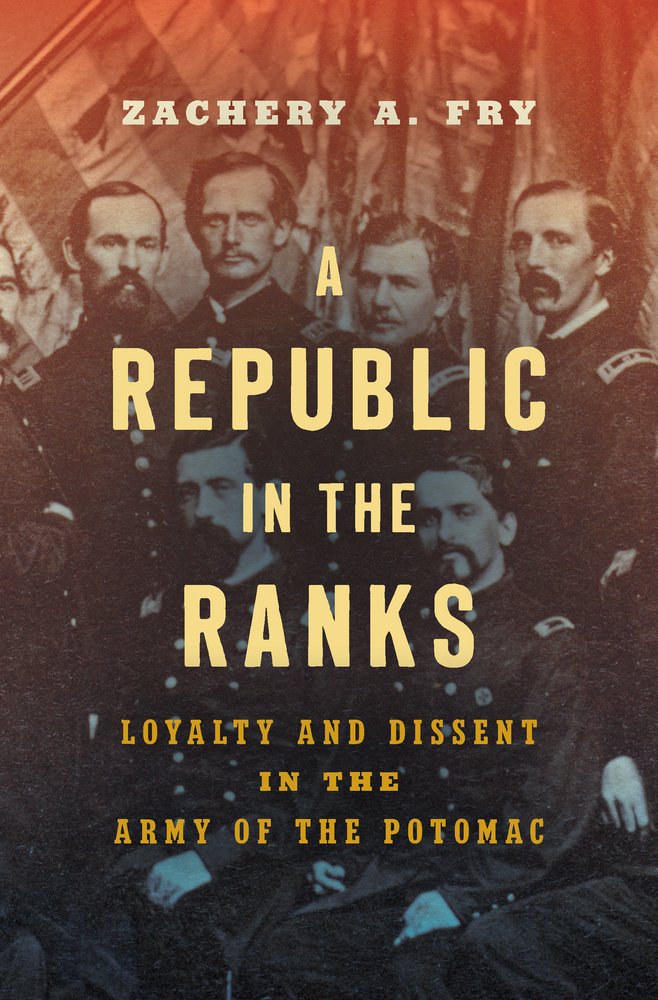
Publisher learned of it from begining to read Zack Fry's very
interesting book, A Republic in the
Ranks,
which is, broadly, about political discussions within the Army of the
Potomac, mostly (but not entirely) during the period 1862--1863, and
mostly (but not entirely) revoving around the issue of
emancipation. As the Publisher is typing this, he has not (yet)
finished the book, so this introduction may well change in the
future. And it is expected that more, similar, letters and
resolutions might appear. While none of this material really bears on the "causes of secession," it does bear on the conflict and reaction in the North around the issue of emancipation, which illustrates the centrality of the slavery issue to the underlying conflict. |
|
|
[From
the Indianapolis Journal,
Jan. 28th, 1863.] A former officer in the 27th regiment, Col. Colgrove, received a letter a day or two since from an old and respected comrade still in the regiment, and resolved, as he says, to stay “till school is out,” in which the policy of the President’s Proclamation is argued with a force and directness that most stump speakers might envy, and with the additional power which his position gives him as a soldier in the army whose efforts alone can make the proclamation effective. He is a Democrat, and a pro-slavery Democrat, as thousands would know if it was proper to so far violate the confidence of a private letter as to reveal his name, but he is a warmer patriot than Democrat—strange that the words once synonymous should be made by selfish disloyal party leaders so contradictory in meaning—and believes that any means are justifiable which will aid in suppressing the rebellion, and that it is no business of ours to preserve the rights of those who defy our Constitution and resist our Government. We extract that portion of his letter:
You know that I am a pro-slavery man in principle, but I will never allow the everlasting negro to get between me and my Government; and, denying as I do, that a rebel has any rights under the Constitution, or the law of nations, and that by his act of rebellion he forfeits not only his property, but even his life, I hold it to be right to take from him his negro and emancipate him, and then take all his real and personal property besides, and confiscate them, and if that will not stop the rebellion, hang the rebel owner.
I tell you this rebellion cannot be put down while we suffer the rebels to keep half a million of negroes working on fortifications for their masters to hide behind to enable them to kill us with impunity. Every negro the rebels have employed thus in their army counts equal to one soldier in our army. Then, since they are using the negro as an element of power and strength to carry on this rebellion, why should we be so timid about the preservation of that “peculiar institution”?
It is the negro labor of the South that produces subsistence for the rebel army. Strike down their labor system, and you destroy the rebellion at once. It may, and doubtless will, operate hard on some few loyal men, but this cannot be helped. On all occasions like the present, it often happens that the innocent, to some extent, suffer with the guilty. You may say that the rebels have no considerable force in arms against us, but if you will reflect a moment, you will see that every man, boy, woman and child of the colored race in rebeldom are engaged in assisting to carry on this rebellion. Negro girls and boys over fourteen years of age are able to make a full hand in the fields in the production of the very sinews of this hell-born and hell-engendered rebellion. They, taken in connection with their fathers and mothers, who all constitute the entire laboring and producing population of the rebel States, are feeding and keeping alive the very men who are levelling their rifles at my heart, as well as the heart of the nation. Must I stop to sympathize with men who are not only trying to kill me, but worse, ten thousand times over, trying to destroy that Government that has so long protected me in all my rights, and made me the recipient of so many blessings and privileges? No, sir. I would confiscate, subjugate, and if that was not sufficient, I would annihilate, the negro and his master, and consume them both on one funeral pile, sooner than I would give up my Government. I am not responsible for the destruction of slavery, nor is President Lincoln. The rebels, as I conceive, by their own persistent folly, have forced the President to adopt the proclamation as a military necessity to enable him to sustain the Government. I do not believe we can conquer them without destroying their labor system; this being my firm conviction, I heartily adopt it. It is true, I would not have made it quite so general; I would have excluded part of North Carolina, and North Alabama, from the operation of it for the present. |
Back to Causes of the Civil War (Main page) Back to Editorial Commentary Source: Zachary Fry, A Republic in the Ranks, UNC Press, 2020, p. 2. Date added to website: July 11, 2026 |